Hello Signature Font
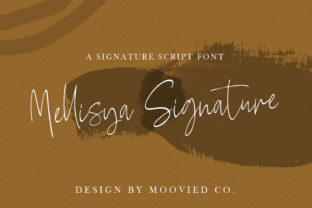
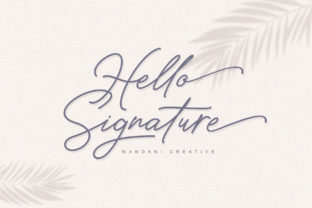
Hello Signature is a handwritten typeface designed to evoke the warmth and individuality of natural penmanship. Unlike script fonts that rely on ornate flourishes or rigid calligraphic structure, Hello Signature balances casual authenticity with legibility—featuring slight irregularities in stroke weight, subtle variations in letter height, and a relaxed rhythm that mimics how people actually write by hand.
It is not a digitized calligraphy font nor a formal script; rather, it sits comfortably between expressive handwriting and functional typography. Its design avoids excessive swashes or ligatures, making it more versatile for real-world use than many decorative alternatives. Hello Signature is typically distributed as a standard OpenType font file, compatible with common design and publishing software including Adobe Creative Cloud, Figma, Canva, and Microsoft Office applications.
Why Designers and Communicators Consider Hello Signature
People explore Hello Signature when they need typographic personality without sacrificing clarity. Common motivations include:
- Creating brand identities that feel approachable and human-centered, especially for small businesses, creative studios, or wellness-focused services;
- Designing invitations, greeting cards, or social media visuals where warmth and sincerity matter more than formality;
- Adding visual distinction to headlines or short quotes in editorial layouts, presentations, or digital campaigns;
- Supporting accessibility goals indirectly—by choosing a font that feels less sterile than default sans-serifs, while still maintaining sufficient contrast and spacing for readability at larger sizes.
Its appeal lies less in technical innovation and more in its consistent tone: timeless, unpretentious, and quietly confident. That makes it relevant for users who prioritize emotional resonance alongside functional performance.
Practical Benefits and Realistic Expectations
One strength of Hello Signature is its ease of integration. It works well across platforms without requiring web font hosting or complex licensing setups for basic use cases. Most versions include standard Latin character sets, numerals, and basic punctuation—sufficient for English-language projects and many European languages.
Legibility holds up reliably at medium-to-large sizes (e.g., 24–60 pt), particularly in headings, logos, and short blocks of text. Its open counters and moderate x-height support quick recognition, even when used over textured backgrounds or in low-contrast settings—provided sufficient size and spacing are maintained.
However, expectations should be calibrated. Hello Signature is not optimized for long-form body text. Its variable stroke width and organic spacing reduce reading speed and increase cognitive load in paragraphs. It also lacks extended language support (e.g., Cyrillic, Arabic, or extensive diacritics), limiting suitability for multilingual publishing. Users should verify glyph coverage before committing to international projects.
Another consideration is licensing. While some variants may be available under free or personal-use licenses, commercial deployment—especially in client work, product packaging, or embedded digital products—often requires a paid license. Always review the specific terms attached to the version being evaluated.
When Hello Signature Fits Well
Hello Signature tends to perform best in contexts where brevity, tone, and visual cohesion outweigh demands for typographic neutrality or scalability. Strong use cases include:
- Branding elements: Logos, wordmarks, or monogram treatments for lifestyle brands, artisanal goods, or service-based businesses emphasizing care and craftsmanship;
- Digital touchpoints: Social media banners, email headers, or website hero sections where a single line of text benefits from expressive typography;
- Print collateral: Wedding stationery, boutique packaging, or event posters where tactile quality and handmade aesthetics align with audience expectations;
- Educational or therapeutic materials: Handouts or worksheets aimed at children, neurodiverse learners, or mental health resources—where softer, less rigid type can support emotional safety and engagement.
In each case, Hello Signature supports intent—not by drawing attention to itself, but by reinforcing message tone through quiet consistency.
When Alternatives May Be More Appropriate
Not every project benefits from handwritten texture. Consider other options if:
- You need consistent, high-contrast legibility across multiple screen sizes and viewing conditions—especially for UI text, navigation labels, or data dashboards. In those scenarios, a well-designed sans-serif like Inter, Manrope, or IBM Plex Sans offers superior functional performance;
- Your content includes lengthy body copy, footnotes, captions, or tables. Even highly legible scripts struggle with dense information hierarchy—here, pairing a neutral text face with a restrained display font often yields better results;
- You require broad language support, variable font features (e.g., optical sizing, grade adjustments), or advanced OpenType capabilities like contextual alternates or stylistic sets. Few handwritten fonts match the engineering depth of professional text families;
- Your brand guidelines emphasize precision, authority, or technological sophistication. Hello Signature’s informality may unintentionally undercut messaging in finance, legal, or enterprise B2B contexts unless deliberately balanced with strong supporting elements.
Making an Informed Choice
Evaluating Hello Signature isn’t about determining whether it’s “good” in absolute terms—it’s about assessing alignment with your specific constraints and goals. Start by clarifying three things:
- What role will the font play? Is it for a logo? A headline? A short tagline? If usage extends beyond brief, prominent placements, test readability at intended sizes and in real environments (e.g., on mobile screens or printed samples).
- Who is the audience—and what do they expect? A fitness coach targeting young adults may find Hello Signature’s energy appropriate; a university department communicating policy updates likely won’t. Audience perception matters more than aesthetic preference alone.
- What tools and workflows are in use? Confirm compatibility with your design stack and content management systems. Some platforms restrict custom font uploads or render certain glyphs inconsistently—verify behavior before finalizing selections.
Finally, treat Hello Signature as one component of a broader typographic system. Even when using it prominently, pair it thoughtfully: a clean, highly legible sans-serif for supporting text ensures balance and maintains usability. Avoid stacking multiple decorative fonts, which can dilute impact and complicate hierarchy.
Ultimately, Hello Signature earns its place not through novelty or technical breadth, but through reliability in narrow, intentional applications. When chosen with purpose—and paired with thoughtful layout, color, and spacing—it contributes meaningfully to communication that feels both authentic and well-considered.