Civide: A Bold, Nostalgic Font for Designers Who Want Personality With Purpose
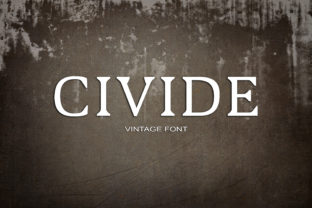
Imagine opening a design file and instantly feeling the energy of a neon-lit arcade, the confidence of a 1980s music video title, or the unapologetic flair of a downtown boutique sign — all without adding a single graphic element. That’s the immediate impression Civide makes. This brand-new vintage font isn’t just *inspired* by retro typography from the ’80s — it channels its spirit with intention. Built on strong geometric foundations and amplified with deliberate boldness, Civide balances nostalgia with modern usability in a way few revival fonts manage.
Where Civide Fits in Real Creative Work
Fonts aren’t chosen in a vacuum — they’re selected to solve problems, reinforce messages, and connect with people. Civide shines brightest when you need a typeface that communicates both personality and presence — without sacrificing legibility or versatility.
For Brand Identity Designers Building Memorable Visual Systems
If you’re crafting a brand identity for a craft brewery launching a citrus IPA named “Neon Glow,” or a vinyl record store with a synth-pop aesthetic, Civide can serve as your primary display font — not as a gimmick, but as a strategic anchor. Its uppercase-heavy rhythm and tight letter spacing give logos and wordmarks an unmistakable silhouette. One designer recently used Civide for a festival logo (a local indie film + music event), pairing it with a clean sans-serif for body text. The result? Instant recognition across posters, merch tags, and Instagram Stories — viewers didn’t just read the name; they *felt* the vibe before scanning a single line of description.
For Social Media Managers and Content Creators Who Need Scroll-Stopping Visuals
In crowded feeds, visual hierarchy is everything. Civide’s bold weight and slightly condensed proportions make it ideal for short, impactful text overlays — think Instagram carousels announcing limited-edition drops, TikTok hooks (“This changed my workflow”), or Pinterest pins highlighting quick tips. Because it’s designed with screen readability in mind (unlike some overly distressed retro fonts), it holds up well even at smaller sizes on mobile — especially when used sparingly for headlines or callouts. Just avoid setting full paragraphs in Civide; its strength lies in emphasis, not endurance.
For Print Designers Working on Packaging, Posters, and Event Collateral
On physical materials, Civide gains even more character. Its sturdy terminals and consistent stroke contrast translate beautifully to spot-color printing — whether it’s foil-stamped on a candle label or silkscreened onto a concert poster. A small-batch skincare brand used Civide for their “Retro Radiance” serum line, pairing the font with soft pastel gradients and subtle grid lines. Customers reported recognizing the packaging on shelves before even seeing the product name — proof that typography, when well-chosen, becomes part of the product’s sensory signature.
Who Benefits Most — And How
Civide isn’t for everyone — and that’s part of its value. It works best when there’s alignment between voice, audience, and context.
- Small business owners with strong point-of-view brands — especially in food & beverage, fashion, beauty, or creative services — find Civide helps them stand out without sounding generic. It signals confidence, not nostalgia-for-its-own-sake.
- Freelance designers building diverse portfolios — Civide adds texture and tonal range. It’s a go-to when clients ask for “something fresh but familiar” or “bold without being aggressive.”
- Marketing teams launching campaigns tied to cultural moments — like throwback-themed product launches, anniversary celebrations, or experiential pop-ups — use Civide to evoke shared memory while keeping visuals crisp and contemporary.
Things to Consider Before You Use Civide
Like any expressive tool, Civide rewards thoughtful application — and reveals its limits when pushed too far.
First, consider your audience’s expectations. If you’re designing for a law firm, financial advisory service, or medical clinic, Civide’s energetic tone may clash with the trust and stability those industries prioritize. It’s less about “can you use it?” and more about “does it deepen understanding — or distract from it?”
Second, pay attention to pairing. Civide thrives alongside neutral, highly legible sans-serifs (think Inter, Poppins, or even Helvetica Neue) — not other decorative or high-contrast fonts. Avoid stacking it with script fonts or ultra-thin weights; the contrast can feel jarring rather than intentional. One common misstep we’ve seen: using Civide for both headline and subhead. Instead, try Civide for the main title, then switch to a clean, medium-weight sans for supporting lines — giving each element room to breathe.
Third, test it in context — not just in your font menu. Drop Civide into actual mockups: a website banner, a product label, a social ad. Does it scale well across devices? Does it retain impact at 24px on desktop and 18px on mobile? Does it render consistently across browsers? Most foundries include webfont kits optimized for performance, but always verify loading behavior in real conditions.
What Makes Civide Different From Other “Retro” Fonts
There’s no shortage of ’80s-inspired typefaces — but many lean heavily into distortion, randomness, or excessive ornamentation. Civide avoids those traps. Its retro cues are subtle and structural: the slight flaring at stem terminals, the uniform x-height, the confident vertical stress. There’s no forced glitch effect, no artificial wear, no unpredictable alternates. That restraint is what makes it adaptable — and why it feels fresh instead of dated.
It also includes robust OpenType features — standard ligatures, case-sensitive forms, and localized glyphs — so it behaves predictably in professional workflows. Whether you’re exporting a PDF for print or generating dynamic web text, Civide delivers consistent output without requiring manual tweaks.
When Civide Might Not Be the Right Choice
While versatile, Civide has natural boundaries. It’s not ideal for long-form editorial content, accessibility-critical interfaces (like government service portals), or environments where extreme neutrality is required. Its personality is its superpower — and sometimes, the brief calls for quiet competence instead of charismatic flair.
Also worth noting: Civide is a display font first. It’s engineered for impact at larger sizes (24px and up). Using it below 16px — especially in UI buttons or captions — risks compromising clarity, particularly for readers with mild visual impairments. Always pair it with a highly legible companion for body copy, and never rely on Civide alone to carry functional information.
Ultimately, Civide invites intentionality. It doesn’t whisper — it declares. But declarations land best when they’re rooted in purpose, not just aesthetics. Whether you’re refreshing a brand’s visual language, spicing up a campaign, or simply looking for a typeface that feels human, memorable, and quietly confident — Civide offers more than nostalgia. It offers a voice — one that’s ready to be heard, clearly and boldly.