Bric: A Thoughtful Serif for Modern Clarity and Quiet Confidence
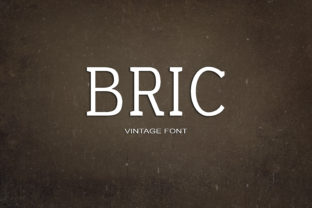
Bric is a serif typeface that avoids both nostalgia and trend-chasing. It doesn’t shout—it invites attention through balance, rhythm, and quiet precision. Designed with contemporary readability in mind, Bric bridges tradition and utility: its roots are in classical proportions, but its details—like the open counters, even stroke modulation, and carefully tuned spacing—are calibrated for screens, print, and variable contexts. It’s not a revival or a reinterpretation; it’s a considered response to how people actually read today.
What Sets Bric Apart Visually and Functionally
Bric’s structure feels familiar without being predictable. Its x-height sits comfortably between traditional book serifs and more compact display faces, supporting legibility at smaller sizes while retaining presence at larger ones. The serifs are bracketed and gently flared—not blunt, not overly ornate—giving each character a grounded, stable appearance. Letterforms like a, e, and g have subtle but distinct shapes that aid character recognition, especially in longer passages or lower-resolution environments.
The font includes a full set of OpenType features: small caps, old-style figures, discretionary ligatures, and contextual alternates. These aren’t decorative flourishes—they serve real tasks. Small caps integrate smoothly into body text for acronyms or headings; old-style figures maintain visual flow in running text containing numbers; ligatures resolve awkward collisions (like fi or fl) without disrupting rhythm. That level of typographic control matters most when consistency across formats—web, PDF, email newsletters, printed brochures—is non-negotiable.
Where Bric Delivers Practical Value
Because Bric balances warmth and neutrality, it performs well across diverse applications. In editorial design—think long-form blogs, digital magazines, or academic publications—it supports sustained reading without fatigue. Its generous inter-character spacing and clear letter differentiation reduce eye strain, particularly on mobile devices where line length and contrast vary widely.
For branding and identity work, Bric offers versatility without ambiguity. Paired with a clean sans-serif for UI elements or captions, it conveys authority without stiffness—ideal for law firms, independent publishers, educational platforms, or wellness practices aiming for credibility and approachability. Unlike some high-contrast serifs that lose definition at small sizes, Bric remains legible in footnotes, captions, and navigation menus—even at 12–14px on screen.
In publishing workflows, Bric’s consistent metrics across weights (Light, Regular, Medium, Semibold, Bold) simplify hierarchy building. You can shift from body text to subheadings using weight alone, without needing to adjust tracking or leading significantly. That predictability saves time during layout and reduces revision cycles—especially valuable for freelancers managing tight deadlines or small teams without dedicated typography specialists.
Audience Fit: Who Benefits Most—and Why
Professionals who prioritize clarity over novelty will find Bric especially useful. Educators crafting course materials benefit from its readability in dense explanations or annotated texts. Marketers building brand guidelines appreciate how Bric scales—from hero headlines on landing pages to fine-print legal disclaimers—without requiring fallbacks or custom adjustments.
Bloggers and content creators publishing regularly notice the difference in tone. Bric lends substance to opinion pieces or reflective essays without sounding academic or distant. Its warmth supports personal voice; its structure reinforces trust. Similarly, small business owners designing their own sales pages, pitch decks, or service brochures gain polish without outsourcing typography decisions.
Freelance designers and agencies use Bric as a reliable “anchor” face—pairing it with neutral sans-serifs like Inter, Poppins, or even system fonts for UI layers. It holds its own in mixed-type systems because it doesn’t compete for attention; instead, it provides grounding. That makes it effective in responsive web projects where typographic behavior must remain consistent across breakpoints.
Real-World Considerations: Strengths and Boundaries
Bric excels where intentionality matters: long-form communication, professional documentation, and identity systems built for longevity. Its optical sizing isn’t variable (i.e., no axis for optical size), so users working at extremes—tiny captions under 10px or massive display settings above 72pt—may need to manually adjust tracking or consider supplemental type choices. That’s not a flaw, but a design decision aligned with its intended scope: robust, mid-range typographic performance.
It’s also not optimized for ultra-narrow widths or tightly constrained UI components like micro-buttons or status tags. For those, a companion sans-serif remains the pragmatic choice. Bric’s strength lies in its middle ground—not in edge cases.
Quality control is consistently high. Kerning pairs are thorough, hinting is well-executed for screen rendering, and language support covers Latin-based scripts comprehensively (including extended diacritics for Central and Eastern European languages). Users working with multilingual content—say, bilingual educational resources or international product documentation—won’t hit unexpected gaps in glyph coverage.
Integration and Workflow Realities
Bric works seamlessly with standard web font delivery methods—hosted via self-hosting, Google Fonts (if available through official channels), or third-party providers. Its file size per weight is modest, minimizing load impact. For print production, its PostScript outlines render cleanly at high resolution, and its PDF embedding behaves predictably across Acrobat versions.
One practical observation: designers new to Bric sometimes default to pairing it with overly geometric sans-serifs, which can create unintended tension. A better match often leans slightly humanist—think Lato, Nunito, or even a restrained version of Helvetica Neue. The contrast should feel complementary, not corrective.
Also worth noting: Bric’s Light and Semibold weights stand out for nuanced use. Light works effectively for pull quotes or delicate captions where emphasis shouldn’t dominate; Semibold serves well for section headers that need distinction without shouting. Overusing Bold can flatten hierarchy—so restraint here pays off.
Final Assessment: When Bric Fits—and When It Might Not
Bric earns its place when you need a serif that does more than look “elegant.” It’s for projects where tone, clarity, and cross-format reliability matter equally—whether you’re typesetting a quarterly investor report, launching a knowledge-based SaaS platform, or designing a nonprofit’s annual impact summary. It supports serious communication without demanding attention for its own sake.
It’s less suited for highly experimental visual identities, kinetic motion graphics, or branding aimed squarely at Gen Z audiences seeking maximal irony or fragmentation. Those contexts often call for bolder, more idiosyncratic, or deliberately imperfect type choices. Bric’s value is in its steadiness—not its surprise.
If your workflow involves frequent switching between screen and print, long editing cycles, or collaboration across non-design stakeholders, Bric reduces friction. Its predictability means fewer last-minute formatting fixes, fewer client questions about “why this looks off,” and more time spent on content and strategy. That kind of efficiency compounds quietly—but meaningfully—over months and projects.
Ultimately, Bric isn’t about standing out. It’s about holding space—clearly, calmly, and competently—for the ideas and messages that actually matter.