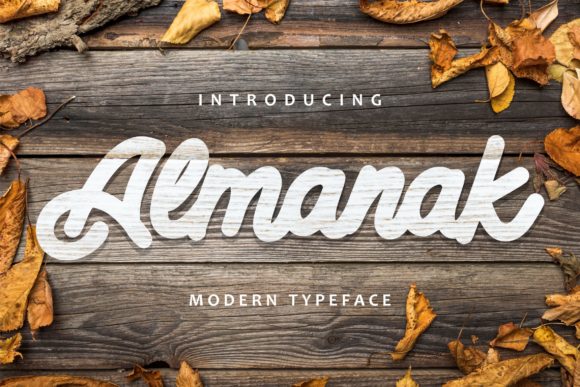
Almanak: The Bold Vintage Script Font That Transforms Crafting Projects
There’s something instantly captivating about a font that feels both timeless and intentional—like it was pulled from a well-loved 1920s letterpress shop, yet still works flawlessly on a modern digital cutting machine. Almanak does exactly that. It’s not just another script font. It’s a statement—a confident, flowing, slightly ornate script with generous swashes, subtle texture, and a bold weight that commands attention without shouting.
What Makes Almanak Stand Out in a Crowded Font Landscape?
In a world saturated with delicate, ultra-thin scripts or overly playful brush fonts, Almanak carves its own lane. Its defining trait is its bold vintage character: thick downstrokes, graceful tapered upstrokes, and carefully balanced spacing that gives every word room to breathe—even at small sizes. Unlike many script fonts that collapse or blur when scaled down, Almanak retains clarity and charm from 14pt greeting card text to 36pt wall art headlines.
The design nods to early 20th-century advertising typography—think hand-painted apothecary signs or elegant theater marquees—but with refined kerning and OpenType features that make it highly functional today. It includes alternate characters, ligatures, and contextual swashes that activate automatically in compatible software (like Adobe Illustrator or Affinity Designer), letting you add subtle sophistication with zero extra effort.
Why Crafters Are Choosing Almanak for Real-World Projects
Crafters don’t just pick fonts for looks—they need reliability, versatility, and compatibility. And that’s where Almanak shines beyond aesthetics. Whether you’re designing vinyl decals, printable party invites, embroidered hoop art, or resin-coated coasters, this font delivers consistent results across materials and machines.
- For Cricut & Silhouette users: Almanak cuts cleanly thanks to its smooth curves and minimal hairline details. No jagged edges, no fragile terminals snapping mid-cut—even on thin cardstock or iron-on vinyl.
- For print-and-cut projects: Its strong contrast and open counters ensure crisp registration, especially important when layering printed backgrounds with die-cut overlays.
- For hand-lettering hybrids: Many designers use Almanak as a base sketch—tracing its rhythm to guide their own brushwork before refining by hand. Its structure teaches flow without constraining creativity.
One maker recently shared how she used Almanak to redesign her entire wedding suite: “I wanted elegance, not frilliness. Almanak gave me warmth and authority—guests told me the invites felt ‘like they held history.’ And yes, they cut perfectly on my Cricut Maker.” That blend of emotional resonance and technical performance is rare—and invaluable.
Fitting Almanak Into Modern Creative Workflows
You don’t need advanced typography training to use Almanak effectively—but a few smart habits will maximize its impact.
First, pair it thoughtfully. Because Almanak carries visual weight, it pairs best with clean, neutral sans-serifs (like Montserrat, Lato, or even system fonts like Inter or Helvetica Neue) for body text or captions. Avoid competing scripts or overly decorative companions—let Almanak be the star. A common mistake? Using it for full paragraphs. Reserve it for headlines, names, quotes, or short accent phrases. Let it sing—not shout through an entire page.
Second, leverage its built-in alternates. In design apps that support OpenType features, turn on “Stylistic Sets” or “Contextual Alternates” to access flourishes that soften transitions between letters—especially helpful for words ending in “y,” “g,” or “j.” These small tweaks add polish that reads as professional, not preset.
Third, test color contrast early. Almanak’s boldness means it holds up beautifully against textured backgrounds—kraft paper, linen prints, or even subtle watercolor scans. But avoid low-contrast combos like light gray on cream; its vintage charm fades without enough visual punch. Deep navy, charcoal, forest green, or burnt sienna tend to highlight its richness best.
Where Almanak Fits Across Creative Niches
While beloved by hobbyists, Almanak has quietly become a go-to in several professional spaces—often where authenticity and tactile appeal matter most.
Boutique Packaging & Product Labeling
Small-batch soap makers, candle brands, and specialty food producers choose Almanak for jar labels and box stamps because it conveys craftsmanship and care—not mass production. Its slight irregularity (intentional, not sloppy) whispers “handmade,” while its boldness ensures shelf visibility.
Wedding & Event Design
From save-the-dates to seating charts and ceremony programs, Almanak adds heirloom energy. It’s formal enough for black-tie affairs but warm enough for rustic barn weddings. Bonus: it scales beautifully across formats—from tiny acrylic place cards to 24” canvas ceremony backdrops.
Digital Templates & Printables
Designers selling Canva-compatible templates or printable planners often embed Almanak as a recommended font. Its legibility on screens (even mobile) and ease of licensing make it a safe, stylish choice for customers who want premium vibes without complex setup.
Things to Consider Before You Use Almanak
Licensing is straightforward—but always double-check. Most versions of Almanak come with commercial use rights, including for physical products you sell (like mugs or tote bags). However, if you're embedding it in an app, SaaS platform, or web font service, verify extended licensing terms. When in doubt, purchase directly from the foundry or trusted resellers like Creative Market or MyFonts.
Also consider your audience. While Almanak’s vintage tone delights lovers of tradition and nostalgia, it may feel less approachable for tech startups or high-energy youth brands. Ask yourself: Does this font reflect *who* the project serves—not just what it says?
And remember—it’s not a one-size-fits-all solution. If your project demands extreme readability at distance (like highway signage or safety instructions), Almanak isn’t the right tool. But for moments meant to linger, to be touched, remembered, or framed? It’s exceptional.
Getting Started With Almanak: Simple Tips for Immediate Impact
- Start small: Try Almanak on a single word—your business name, a quote, or a monogram. See how it feels in your brand palette before expanding.
- Use tracking wisely: Slightly increased letter-spacing (5–10 units in most apps) enhances Almanak’s elegance, especially in all-caps settings. Avoid tightening—it crowds its natural rhythm.
- Embrace imperfection: If printing on textured paper or using a laser cutter with slight variance, lean into Almanak’s organic flow. Its slight variation in stroke weight makes minor inconsistencies look intentional—not flawed.
- Export smartly: For SVG use in cutting software, outline the text first. For print, embed fonts or export as PDF/X-4 to preserve swashes and ligatures.
Ultimately, Almanak isn’t just about decoration. It’s about intentionality—choosing a voice that aligns with your craft’s soul. It invites slowness in a fast world, celebrates detail in an age of speed, and reminds us that beautiful tools don’t have to be complicated to be meaningful.
Whether you’re pressing foil onto handmade stationery or designing a logo for your grandmother’s jam business, Almanak brings presence. Not flash. Not trend. Just quiet, confident, vintage-rooted distinction—ready for your next project.