Baginda: A Strategic Choice for Editorial Impact and Brand Distinction
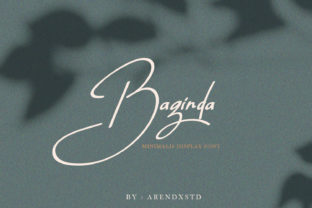
Baginda isn’t just another script font—it’s a deliberate design decision with editorial weight, personality, and functional clarity. Designed to be both friendly and bold, Baginda stands apart through its expressive swashes, rhythmic contrast, and confident letterforms. For professionals who rely on visual language to shape perception—whether launching a boutique brand, designing a magazine spread, or refining a course landing page—Baginda offers more than aesthetics. It delivers strategic leverage when used with intention.
Why Baginda Fits Real-World Design Strategy
Typography is rarely neutral. Every typeface carries implicit associations: authority, warmth, tradition, innovation, playfulness, or precision. Baginda leans into editorial confidence—not the stiff formality of a newspaper masthead, but the curated energy of a well-edited lifestyle journal or an independent publisher’s imprint. Its swashes aren’t decorative flourishes; they’re functional extensions of voice. They signal care in craft, attention to rhythm, and a willingness to stand out without sacrificing legibility.
This makes Baginda especially useful when your goal is distinction with clarity. Small business owners choosing fonts for their new artisanal bakery’s packaging, educators designing workshop handouts that need to feel approachable yet polished, or freelancers building portfolios that reflect both creativity and professionalism—all benefit from Baginda’s balance. It doesn’t shout; it invites closer reading. And in a landscape saturated with minimalist sans-serifs and overused display fonts, that invitation becomes a quiet competitive advantage.
Where Baginda Delivers Measurable Value
Consider these practical use cases where Baginda supports outcomes—not just visuals:
- Brand positioning: When launching a premium service or product line, Baginda can anchor a refined, human-centered identity—especially paired with a clean, structured sans-serif for body text. The contrast reinforces hierarchy and signals thoughtful curation.
- Editorial storytelling: Blog headers, newsletter subject lines, or chapter titles gain narrative momentum with Baginda’s swashes. A well-placed swash on the first letter of “Growth” or “Begin” subtly reinforces meaning—not through symbolism, but through pacing and emphasis.
- Customer experience refinement: In digital interfaces, Baginda works effectively at larger sizes—think hero section headlines, testimonial quotes, or limited-use callouts. Its friendliness lowers perceived friction; its boldness commands attention without aggression.
- Learning material design: Educators and course creators report stronger engagement when using Baginda for section dividers or key concept headers. Its warmth supports retention by reducing cognitive load associated with overly rigid or sterile typography.
Using Baginda Intentionally—Not Automatically
Baginda’s strength lies in restraint. Its swashes are expressive, not exhaustive. Using them on every word dilutes impact—and risks undermining credibility. Think of Baginda like a well-chosen quotation: powerful in context, weak when overused.
Start with a clear goal: What outcome do I want this text to support? If the answer is “grab attention,” Baginda may be ideal—for a headline, not a paragraph. If the goal is “build trust through consistency,” then deploy Baginda only where it reinforces that trust: perhaps in a logo lockup, a signature tagline, or recurring section headers across a website.
Also consider technical context. Baginda performs best at sizes above 36px for display use and scales cleanly in modern web environments—but avoid embedding full swash variants in small UI elements or dense mobile menus. Test readability across devices. Ask: Does this still communicate clearly when someone scrolls past quickly? Does it load reliably without fallback distortion?
Planning Your Baginda Implementation
Before applying Baginda, map it to your broader communication strategy:
- Define the role: Will it serve as a primary brand identifier (e.g., in a logo), a secondary accent (e.g., for pull quotes), or a situational tool (e.g., seasonal campaign headers)? Each role demands different usage rules.
- Pair deliberately: Baginda thrives alongside typefaces with strong x-heights and open counters—think Inter, Poppins, or Source Sans Pro. Avoid pairing with other high-contrast scripts or overly ornate serifs; the result competes rather than complements.
- Limit swash variation: Most Baginda families include standard, swash, and alternate glyphs. Use swashes selectively—typically on initial caps or final letters in short phrases. Enable OpenType features like stylistic sets only where needed, and always preview how they render across platforms.
- Document usage: Include Baginda guidelines in your brand or design system—specifying size ranges, color contrast minimums, spacing adjustments, and prohibited contexts (e.g., “never used for pricing tables or legal disclaimers”). Consistency compounds long-term recognition.
Risks of Unintentional Use
Without grounding in goals or audience context, Baginda can misfire. Its friendliness may read as unserious in highly regulated industries (e.g., finance compliance documents or medical disclosures). Its boldness may overwhelm users with low vision if contrast ratios fall below WCAG 2.1 AA standards. And its editorial tone may feel incongruent with brands built on raw utility—think logistics dashboards or industrial equipment manuals.
More subtly, misuse erodes credibility. A startup using Baginda for every heading—including error messages and form labels—signals poor information architecture. A nonprofit deploying it across all communications without adjusting weight or spacing may unintentionally prioritize style over accessibility. These aren’t flaws in Baginda—they’re gaps in alignment between tool and purpose.
Long-Term Value Lies in Discipline
Fonts like Baginda endure not because they’re trendy, but because they scale with intention. Over five years, a brand that uses Baginda only where it strengthens messaging—rather than fills space—builds associative strength. Customers begin to recognize its rhythm as shorthand for quality, care, or craftsmanship. That kind of recognition doesn’t come from volume; it comes from repetition with meaning.
For creators iterating on a personal brand, Baginda offers stability: a consistent tonal anchor across evolving projects. For teams managing multiple campaigns, it provides a shared visual shorthand—reducing revision cycles and reinforcing internal alignment. And for educators or publishers building long-form resources, its editorial character supports sustained engagement without fatigue.
Final Strategic Guidance
Ask yourself three questions before selecting Baginda:
- Does this usage directly support a specific communication goal—or is it primarily stylistic? If the latter, pause and clarify the objective first.
- Will this application remain effective across formats—print, web, email, social thumbnails—and for diverse users? Test early, test broadly.
- Can I articulate why Baginda fits this context better than two or three other strong alternatives? If not, revisit your criteria—not the font.
Baginda rewards thoughtful deployment. It won’t fix weak messaging, compensate for inconsistent branding, or substitute for sound strategy. But in the hands of someone who plans before placing, who edits before exporting, and who aligns form with function—Baginda becomes more than a font. It becomes a quiet, confident part of your operational language.