Paperlove: Where Handwritten Charm Meets Design Impact
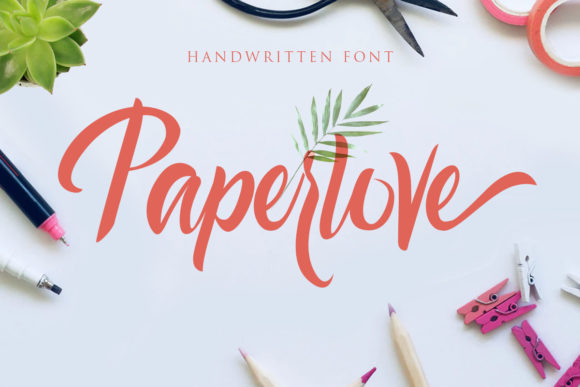
There’s a quiet magic in handwriting—the slight variation in line weight, the gentle tilt of letters, the way ink seems to breathe on paper. Paperlove captures that magic with remarkable authenticity. It’s not just another script font—it’s a sweet and stunning handwritten typeface with a whimsical twist that feels personal, warm, and unmistakably human.
More Than Just Pretty Letters
At first glance, Paperlove invites you in with its soft curves, playful ascenders, and subtle bounce. But look closer, and you’ll notice thoughtful design decisions: consistent spacing that avoids visual clutter, carefully balanced x-heights for legibility at small sizes, and alternate characters that add nuance—not chaos. Unlike overly ornate scripts that sacrifice function for flair, Paperlove was built to perform. It works beautifully on packaging labels, wedding invitations, social media graphics, and even short-form web copy—where personality matters as much as clarity.
Why Designers Reach for Paperlove Again and Again
It’s rare to find a handwritten font that feels both expressive and reliable. Many scripts either lean too far into formality (losing warmth) or veer into illegibility (sacrificing utility). Paperlove walks that line with intention. Its lowercase ‘g’, ‘y’, and ‘q’ feature charming, slightly exaggerated loops—just enough to delight without confusing. The uppercase letters retain elegance without stiffness, making them ideal for monograms, logos, or hero text that needs presence.
- Realistic texture: Subtle imperfections mimic natural pen-on-paper movement—no robotic uniformity.
- Open counters: Letters like ‘a’, ‘e’, and ‘o’ have generous interior space, improving readability across devices.
- Smart alternates: Includes contextual ligatures and stylistic sets that activate automatically in OpenType-savvy apps like Adobe Illustrator or Affinity Designer.
- Cross-platform friendly: Works smoothly in Figma, Canva, and Google Fonts-compatible environments (when self-hosted or embedded properly).
Fitting Seamlessly Into Real-World Projects
Think about where handwriting adds emotional resonance: a boutique coffee shop’s chalkboard menu, a children’s book cover, a handmade soap label, or an artisanal bakery’s seasonal postcard. In each case, Paperlove doesn’t shout—it connects. It whispers “carefully made,” “thoughtfully chosen,” “uniquely yours.”
For branding teams, Paperlove often serves as a secondary typeface—paired with a clean sans-serif like Inter or Poppins for balance. That contrast creates visual hierarchy while preserving approachability. A wellness brand might use Paperlove for taglines (“Breathe Deeply,” “Begin Again”) and body text in a neutral typeface—softening the message without diluting its authority.
In digital spaces, Paperlove shines when used intentionally. A short Instagram carousel headline? Perfect. A newsletter subject line that stands out in a crowded inbox? Absolutely. But avoid long paragraphs—handwritten fonts fatigue the eye faster than structured ones. Use it where attention is earned, not demanded.
What Makes Paperlove Stand Out Among Handwritten Fonts?
Not all handwritten fonts are created equal—and not all are suited for professional use. Some lack language support beyond English; others don’t include numerals or punctuation that match the letterforms. Paperlove includes full Latin character sets, standard and discretionary ligatures, and well-designed symbols—so your price tags, dates, and email addresses feel cohesive, not tacked on.
Compare it to popular alternatives: While fonts like *Pacifico* or *Dancing Script* offer energy, they can feel generic after repeated use. Paperlove has a distinctive voice—gentle but confident, nostalgic but fresh. It doesn’t try to be everything; it excels at being *just right* for moments that need sincerity over spectacle.
Practical Tips for Using Paperlove Well
Like any expressive tool, Paperlove rewards thoughtful application. Here’s how to get the most from it:
- Respect scale: At 16px or smaller, use only uppercase or bold-weight variants for impact—never fine-detail lowercase in tiny sizes.
- Pair wisely: Avoid other decorative fonts nearby. Let Paperlove be the star. Neutral companions like Lato, Montserrat, or even Georgia provide grounded contrast.
- Test color contrast: Its delicate strokes need strong foreground/background contrast—especially on screens. Dark charcoal on off-white beats light gray on beige every time.
- Consider licensing early: Paperlove is typically available via reputable foundries or marketplaces like Creative Market or MyFonts. Check whether your intended use—web embedding, app integration, or merchandise printing—is covered. Commercial licenses are affordable and often include updates.
- Customize subtly: In vector editors, slight tracking adjustments (+20–+40) often enhance rhythm. Never stretch or skew—its charm lives in organic proportion.
When Paperlove Isn’t the Right Choice
Honesty matters. Paperlove isn’t ideal for data-heavy dashboards, technical documentation, or interfaces requiring rapid scanning. It’s also not the best fit for brands aiming for stark minimalism, high-tech precision, or corporate austerity. If your audience expects clinical clarity over emotional resonance—or if your project demands multilingual support beyond Western European languages—explore alternatives first.
Also worth noting: While Paperlove renders beautifully on modern browsers and design tools, older email clients may fall back to system fonts. Always preview across platforms, especially if using it in HTML email headers.
From Concept to Confidence: How Paperlove Supports Creative Flow
Many designers describe working with Paperlove as “effortless inspiration.” Its natural flow encourages experimentation—sketching headlines, testing layouts, iterating quickly. Because it feels intuitive, not intimidating, it lowers the barrier between idea and execution. A small business owner designing their first logo? Paperlove helps them express warmth without needing typography training. A student building a portfolio? It adds polish without pretense.
And because it’s versatile across mediums—print, web, motion graphics, embroidery digitizing—it supports evolving creative needs. You might start with a Paperlove-driven Instagram story, then adapt the same phrase for a tote bag print, then animate it gently for a YouTube intro—all while maintaining tonal consistency.
That kind of continuity builds trust—not just with audiences, but with creators themselves. When a tool feels responsive and respectful of your intent, you spend less time wrestling with aesthetics and more time communicating meaning.
Final Thought: Personality With Purpose
Typography is never neutral. Every font carries tone, history, and expectation. Paperlove chooses joy, intimacy, and quiet confidence. It doesn’t chase trends—it refines them. Whether you’re crafting a heartfelt note, launching a lifestyle brand, or adding soul to a UI element, Paperlove turns ordinary text into something memorable. Not flashy. Not forced. Just sweet, stunning, and deeply human.