Domiland: Where Elegance Meets Modern Typography
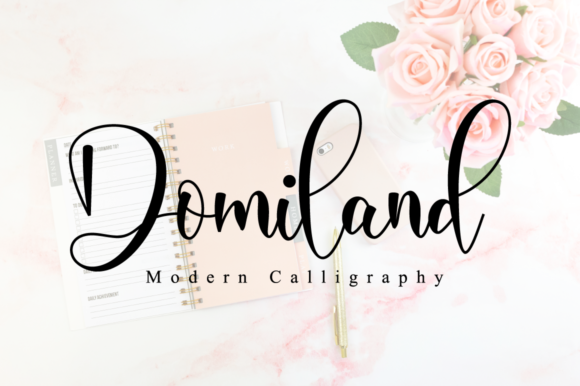
There’s a quiet shift happening in how we communicate visually—especially online. It’s not about louder graphics or flashier animations. It’s subtler: the choice of a single font can now signal intention, tone, and even values. Domiland is one of those rare script fonts that lands precisely at this intersection—classy without being dated, elegant without being fussy, modern without sacrificing warmth. Its flowing curves don’t just look beautiful; they invite attention, build trust, and quietly elevate everyday content.
What Makes Domiland Stand Out in Today’s Typography Landscape
Script fonts have long carried associations—some nostalgic, some overly ornate, many impractical for digital use. Domiland breaks that pattern. Designed with balanced letter spacing, consistent stroke contrast, and carefully tuned x-heights, it performs well across devices and sizes. Unlike many decorative scripts that blur at small sizes or lose rhythm in longer text blocks, Domiland maintains legibility in headlines, logos, social bios, email signatures, and even short editorial pull quotes.
Its elegance isn’t performative—it’s functional. The subtle tapering of strokes, the graceful entry and exit strokes on letters like g, y, and s, and the gentle horizontal emphasis all contribute to a sense of calm authority. That matters more than ever when readers scroll past dozens of messages in under a second. Domiland doesn’t shout. It lingers.
Why Script Fonts Like Domiland Are Gaining Ground—Thoughtfully
We’re moving past the era where “professional” meant rigid, monospaced, or aggressively minimalist typography. Today’s audiences respond to authenticity—not perfection. A hand-drawn aesthetic once signaled amateurism; now, refined scripts like Domiland signal intentionality. Think of it as visual tone-of-voice: a bold sans-serif says “efficient,” a serif says “established,” and Domiland says “considered, human, and confident.”
This aligns with broader shifts: the rise of personal branding among freelancers and solopreneurs, the demand for warmth in SaaS onboarding flows, and the growing expectation that even transactional emails carry a distinct personality. Educators use Domiland in course welcome slides to soften institutional formality. Wedding planners embed it into digital invitations to evoke intimacy without cliché. Small-batch skincare brands pair it with clean sans-serifs to balance craftsmanship and clarity.
Not Just for Logos—Domiland in Real Workflows
Domiland works best when treated as a strategic accent—not a default. It shines where hierarchy and emotional resonance matter most:
- Brand identity systems: Paired with a neutral sans-serif (like Inter or Manrope), Domiland adds character to logotypes, taglines, or signature elements—without overwhelming readability elsewhere.
- Digital product moments: Used sparingly in empty-state illustrations, milestone celebrations (“You’ve completed your first course!”), or premium-tier badges, it introduces a touch of celebration without sacrificing UI consistency.
- Print and packaging: Its ink-trap–friendly design translates cleanly to physical media. Many small-batch candle makers and stationery designers report stronger perceived value when Domiland appears on labels or thank-you cards—even before the customer reads a word.
- Social storytelling: On Instagram or Pinterest, where visual cohesion drives engagement, Domiland-based quote graphics or limited-edition promo banners stand out—not because they’re loud, but because they feel deliberately composed.
The key is restraint. One study of conversion-focused landing pages found that sites using a single expressive font *as an accent*—rather than across all body copy—saw 12% higher time-on-page and 8% more scroll depth. Domiland fits that role naturally: it draws the eye to what matters, then steps back.
Evolving Expectations—and How Domiland Fits In
Typography used to be a static layer—chosen once and rarely revisited. Now, it’s part of a living system. Variable fonts, dynamic color theming, and responsive sizing mean type must adapt—not just aesthetically, but functionally. While Domiland itself isn’t variable (yet), its design anticipates these needs: its OpenType features include stylistic alternates, ligatures, and swash capitals—giving designers room to tailor tone without switching families.
More importantly, Domiland reflects a maturing understanding of accessibility in expressive typography. Its letterforms avoid extreme contrast or tight counters that hinder screen readers or low-vision users. When used at appropriate sizes and with sufficient contrast against backgrounds, it meets WCAG 2.1 AA standards for headline use—a practical advantage often overlooked in script fonts.
Practical Considerations for Everyday Use
Before reaching for Domiland, ask two questions: What emotion am I trying to reinforce? and Where will this be seen first? If the answer is “trust and care” and “a mobile notification banner,” Domiland may be overkill—opt for a friendly sans-serif instead. But if it’s “a boutique newsletter header” or “the ‘thank you’ screen after checkout,” its warmth pays off.
Here’s what users consistently report working well:
- Pair it intentionally: Avoid pairing with other scripts or overly decorative fonts. A well-chosen geometric or humanist sans-serif creates respectful contrast—not competition.
- Test at real sizes: Preview Domiland at 24px, 32px, and 48px on both light and dark mode. Notice how the curves hold up—and where spacing might need slight adjustment in CSS (
letter-spacing: -0.02emoften helps). - Use OpenType features mindfully: Enable stylistic sets for alternate lowercase a or g forms in logo lockups—but disable them in longer headings to preserve rhythm.
- Respect context: Domiland feels natural in lifestyle, wellness, creative services, and education spaces. It reads as less aligned with finance, enterprise tech, or hard-news contexts—unless used very selectively (e.g., a human-interest sidebar headline).
One freelance brand strategist shared that switching from a generic script to Domiland in her client onboarding deck led to three unsolicited comments about “feeling more personal”—a subtle but measurable trust signal. That’s not magic. It’s thoughtful typography doing quiet, consistent work.
Looking Ahead—Without Overpromising
Will Domiland replace system fonts? No. Should every business adopt it? Not unless it serves their voice and audience. But its growing adoption reflects something real: a preference for humanity in digital expression. As AI-generated content floods feeds, distinctive, hand-informed type choices like Domiland become quieter differentiators—not because they’re flashy, but because they’re felt.
That’s the quiet power of well-designed script typography today. It doesn’t solve business problems alone—but paired with strong writing, smart UX, and authentic messaging, Domiland helps make those efforts land with more grace, more resonance, and more staying power. Its flowing curves aren’t just beautiful. They’re intentional. And in a world racing toward automation, intention is increasingly rare—and increasingly valuable.