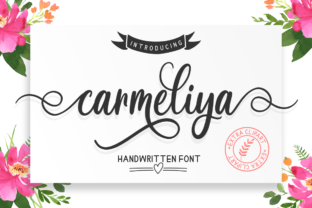
Valdemar: A Bold, Charming Script Font
If you’ve ever scrolled past a logo, social post, or book cover and paused—just for a second—because the lettering felt unexpectedly alive, you’ve likely encountered the quiet power of a well-chosen script font. Valdemar is one of those rare typefaces that lands with both confidence and warmth: bold enough to command attention, charming enough to invite connection. It’s not a throwback to ornate calligraphy, nor is it a sterile digital imitation—it’s a modern script with intention, rhythm, and personality.
What Makes Valdemar Stand Out
At its core, Valdemar is a single-weight, connected script designed for clarity and character. Unlike many scripts that sacrifice legibility for flourish, Valdemar balances expressive swashes with clean entry and exit strokes. Its lowercase ‘a’, ‘g’, and ‘y’ carry subtle but distinctive shapes—recognizable at a glance, yet never distracting. Uppercase letters have presence without aggression; they lean forward just enough to feel conversational, not casual.
The spacing is thoughtfully open—not tight like a handwriting simulation, nor loose like a decorative display face. That means Valdemar works surprisingly well in mid-size applications: email headers, slide titles, short quotes in newsletters, even product packaging where shelf impact matters. And because it’s carefully hinted and optimized, it renders cleanly across devices—from retina displays to older Android browsers.
Where Valdemar Earns Its Place
You don’t need a branding agency to benefit from Valdemar. You just need a moment where tone matters as much as text.
- Small business owners use Valdemar for café chalkboard menus, boutique tags, and Instagram story highlights—where friendliness and authenticity are part of the service.
- Educators and course creators apply it sparingly in slide decks or worksheet headers to soften academic material without undermining authority. One teacher told us she uses Valdemar only for “big idea” section titles—students report those slides “stick in memory more.”
- Bloggers and newsletter writers drop it into pull quotes or subheadings to create visual breathing room—and readers consistently cite those moments as “the part I re-read.”
- Freelancers and designers keep Valdemar in their toolkit for client presentations where they want to signal creativity *without* sacrificing professionalism. It pairs especially well with neutral sans-serifs like Inter, Lato, or even system fonts like SF Pro or Segoe UI.
Real Use, Not Just Real Estate
Valdemar isn’t built for body text—and pretending otherwise will backfire. It shines where you’re aiming for resonance over repetition. Think: the tagline on your landing page, the signature line in your email footer, the title treatment on a limited-edition zine, or the hand-lettered vibe in an animated explainer video.
We’ve seen it used effectively in contexts you might not expect: a local library’s summer reading challenge poster (replacing generic Comic Sans with something genuinely inviting), a therapist’s website hero section (“You’re welcome here” in Valdemar, paired with a warm photo), even a sustainable skincare brand’s ingredient list header—subtle, human, trustworthy.
Practical Tips Before You Type
Valdemar rewards thoughtful application—not just installation. Here’s what seasoned users consistently tell us:
- Less is more—especially with swashes. The standard version includes optional alternate characters (like a flourished ‘t’ or looping ‘f’). Use them selectively: maybe only on the first letter of a headline, or in a logo lockup. Overuse dilutes impact.
- Test contrast early. Valdemar has moderate stroke contrast—not as dramatic as a high-contrast script like Great Vibes, but more than a monoline face. On light backgrounds with dark text, it sings. On busy photos or low-contrast surfaces? Try tightening tracking slightly or adding subtle text shadow for separation.
- Watch your line length. Because it’s a connected script, long paragraphs can blur. Stick to lines under 40 characters for display use, and avoid justified alignment—it disrupts the natural flow of connections between letters.
- Pair with purpose. Avoid pairing Valdemar with other scripts or overly decorative fonts. Its strength lies in contrast: let it be the voice, and choose a calm, functional companion for supporting text. A well-set paragraph in Open Sans or Roboto makes Valdemar feel even more intentional.
Not Every Project Needs Valdemar—And That’s Okay
It won’t solve weak messaging. It won’t compensate for poor hierarchy or inconsistent color. But when your goal is to convey approachability with authority—or elegance with ease—Valdemar delivers with quiet precision.
One freelance copywriter we spoke with uses it exclusively for client onboarding emails: “It’s the first thing they see after ‘Welcome.’ It tells them, ‘This isn’t corporate boilerplate. We see you—and we mean it.’” Another indie publisher uses it only for author bios on book jackets: “Readers remember the name, not the font—but Valdemar makes the name feel like it belongs.”
That’s the nuance: Valdemar doesn’t shout. It leans in. It suggests familiarity without presumption. And in a digital landscape saturated with algorithm-driven sameness, that kind of considered humanity is increasingly rare—and increasingly valuable.
A Final Note on Licensing & Implementation
Valdemar is available through reputable foundries with clear web, desktop, and app licensing options. If you’re embedding it on a client site, confirm the license covers your intended usage—especially if it’s a SaaS platform or membership portal. Most providers offer straightforward CSS @font-face kits, and variable versions (if available) give you fine control over weight or width without loading multiple files.
And if you’re evaluating alternatives? Look beyond aesthetics. Ask: Does it support my language needs? Does it include proper punctuation and numerals? Does it render consistently across Chrome, Safari, and Firefox? Valdemar checks those boxes—and does so without demanding custom fallbacks or complex loading logic.
Ultimately, typography is about stewardship: of attention, of meaning, of time. Valdemar earns its place not by being everywhere—but by being exactly right, exactly when it’s needed.