Gisella: A Sweet, Natural Handwritten Font
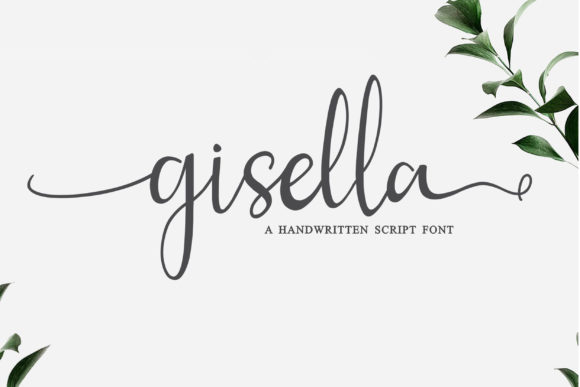
If you’ve ever paused on a hand-lettered bakery sign, lingered over a wedding invitation written in ink that breathes, or felt a quiet warmth from a small-batch product label—then you already know the kind of presence Gisella brings. It’s not flashy or overly stylized. It’s not trying to shout. Instead, Gisella leans in with gentle curves, uneven baseline rhythm, and subtle variations in stroke weight—just like real handwriting done with care and calm confidence.
What Makes Gisella Feel So Authentic?
Gisella is a handwritten font, but it avoids the trap of looking “too perfect” or digitally stiff. Its lowercase a, g, and y have soft, open counters. Letters connect with light, organic entry and exit strokes—not forced ligatures, but natural flow. There’s a slight tilt, a relaxed slant—not rigidly upright, not dramatically cursive. That tilt gives movement without sacrificing legibility. And because it was drawn by hand first (not generated algorithmically), the spacing between letters feels intuitive, not mechanical.
You’ll notice small imperfections: a hairline taper here, a barely-there ink bleed there, a dot that sits just off-center on an i. These aren’t flaws—they’re cues your brain reads as human. That’s why Gisella works so well when authenticity matters more than polish: for indie brands, personal blogs, artisan packaging, or heartfelt social media posts.
Where Gisella Shines—and Where It Doesn’t
Gisella is a display font, not a body text workhorse. Think of it as your voice for moments that need tone, not volume. It excels in contexts where personality and warmth are part of the message:
- Logo design for lifestyle brands, bakeries, florists, wellness studios, or children’s products—especially when paired with a clean sans serif for balance;
- Editorial design for magazine covers, newsletter headers, or book chapter titles where you want readers to pause and feel before they read;
- Packaging design for small-batch goods—soap labels, jam jars, greeting cards—where tactile appeal translates into shelf presence;
- Social media graphics for quotes, announcements, or seasonal campaigns that benefit from approachability over authority;
- Print collateral like wedding stationery, baby shower invites, or handmade workshop flyers—anything where “handmade” is part of the value proposition.
It’s less suited for long paragraphs, dense reports, legal disclaimers, or UI buttons. Not because it’s poorly designed—but because its strength lies in expression, not endurance. Using Gisella for body copy would strain readability and dilute its impact. Respect its role. Let it introduce, invite, or emphasize—not explain or instruct.
How Gisella Shapes Perception—Without Saying a Word
Typography isn’t neutral. It carries weight, history, and emotional resonance. When you choose Gisella, you’re quietly telling your audience: *This is made with attention. This is thoughtful, not transactional. This person—or brand—values feeling as much as function.*
That impression builds trust, especially among audiences aged 20–50 who increasingly favor small businesses and creator-led brands. In a feed saturated with sleek, algorithm-optimized visuals, Gisella stands out by being gently imperfect—human-scale, not corporate-scale. It supports consistency across touchpoints (a website banner, Instagram story, and printed thank-you card) without demanding uniformity. Because it’s expressive, not rigid, it adapts while staying recognizably itself.
That recognition adds up. Over time, people begin to associate that soft, looping rhythm with your brand—not because it’s loud, but because it’s consistent and intentional.
Practical Tips Before You Use It
Check the styles included. Most premium versions of Gisella include at least regular and bold weights—and sometimes alternate characters (like swash capitals or contextual ligatures). If your project needs variety—say, a logo in bold and subheadings in regular—confirm those are available before licensing.
Test pairings early. Gisella pairs beautifully with warm, open sans serifs (think Inter, Manrope, or Work Sans) and even some low-contrast serifs (Merriweather, PT Serif). Avoid pairing it with ultra-thin fonts or tightly spaced geometric sans serifs—they’ll clash in energy. Try setting a headline in Gisella and body copy in your chosen companion at real size, on screen and printed. Does the contrast support hierarchy—or fight it?
Readability isn’t just about size. At small sizes (under 18px on screen or 10pt in print), Gisella’s delicate details soften. For accessibility and clarity, reserve it for larger display uses. If you need something readable at smaller scales, use it only for short labels or initials—and always test with actual users, not just your own eyes.
Licensing matters—especially commercially. Gisella is a commercial font, meaning most licenses cover websites, apps, logos, merchandise, and client work—but check the fine print. Some licenses limit impressions per month or restrict use in SaaS platforms. If you’re a designer licensing for a client, clarify whether they need their own license or if yours extends to their usage. When in doubt, go straight to the foundry’s terms—not third-party resellers.
A Final Thought: Let Gisella Be What It Is
There’s a quiet power in restraint. Gisella doesn’t try to be everything. It doesn’t mimic calligraphy tools or chase trends. It simply offers what many modern projects lack: sincerity, simplicity, and space to breathe. Whether you’re designing a new brand identity, refreshing your blog’s aesthetic, or printing 50 handmade gift tags—it meets you where you are, not where marketing tells you to be.
So don’t overthink it. Try it on a single line of text first. See how it changes the mood of a layout. Notice how it softens edges, invites closeness, and signals care—without a single word of explanation. That’s not magic. It’s good modern typography, thoughtfully made. And that’s why Gisella stays relevant, useful, and quietly unforgettable.