Chantique: A Refined Script Font for Romantic, Human-Centered Design
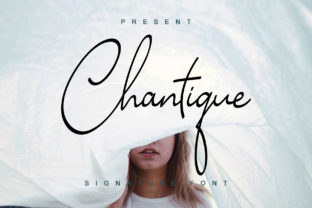
Chantique stands out not because it shouts, but because it speaks with quiet confidence—a script font that balances elegance and approachability without leaning into cliché or excess. Designed with intention rather than trend-chasing, Chantique offers a distinct voice among contemporary display typefaces: one that feels handwritten yet consistently legible, delicate yet structurally sound, and expressive without sacrificing usability.
What Sets Chantique Apart from Other Script Fonts
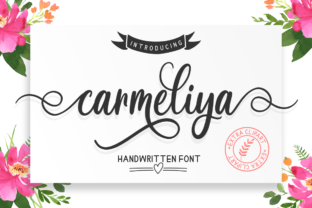
Many script fonts fall into predictable categories—either overly ornate (with flourishes that hinder readability at smaller sizes) or too minimal (losing the warmth and rhythm expected of hand-drawn lettering). Chantique avoids both extremes. Its lowercase forms feature subtle variation in stroke weight, gentle tapering on terminals, and soft, organic entry/exit strokes—not rigid calligraphic precision, but the kind of controlled spontaneity you’d see in skilled penmanship.
The uppercase letters retain presence without dominance, and the spacing is thoughtfully adjusted to support even rhythm across words. Unlike some scripts that rely heavily on contextual alternates or require OpenType-aware software to function well, Chantique delivers strong default behavior. It works reliably in standard design tools—Figma, Adobe Creative Cloud, Canva—and renders cleanly across web platforms when properly embedded.
Practical Strengths in Real-World Use
Chantique performs especially well in contexts where tone matters as much as information: wedding stationery, boutique branding, editorial features, artisan product packaging, and personal storytelling projects. For example, a small-batch candle brand used Chantique for its “hand-poured since 2020” tagline on labels—pairing it with a neutral sans serif for body text. The result felt intentional and warm, not saccharine or dated.
Its x-height is generous enough to maintain clarity at 16–18px on screen, making it viable for short headlines in digital newsletters or hero sections—though it’s not intended for long-form body copy. In print, it holds up beautifully at 24–36pt for invitations or book chapter titles. Test prints show consistent ink spread and crisp edge definition, even on uncoated paper stocks.
Chantique includes standard Latin characters, numerals, basic punctuation, and accented glyphs for Western European languages. It does not include Cyrillic, Greek, or extended diacritic sets—so multilingual publishing beyond Romance and Germanic languages may require fallback solutions.
Who Benefits Most—and When It Might Fall Short
Freelance designers building brand identities for lifestyle, wellness, or creative service businesses often find Chantique fits naturally into mood boards and style guides. Its restrained charm helps differentiate clients from competitors relying on overused brush scripts or ultra-thin serifs. Educators crafting presentation slides for literature or art history courses have noted how Chantique adds visual nuance to quotes or thematic headers—without distracting from content.
Bloggers and newsletter writers use Chantique selectively: as a signature font for section dividers, featured quote blocks, or seasonal banners (e.g., “Spring Collection” headers). One food writer applied it to recipe titles in a subscriber-only PDF cookbook—reporting higher engagement metrics on those pages compared to previous typographic treatments.
That said, Chantique isn’t ideal for every scenario. It lacks bold or italic variants, so pairing requires careful contrast—typically with a clean, humanist sans like Inter, Manrope, or Public Sans. It won’t serve technical documentation, SaaS dashboards, or data-heavy reports. And while its personality is consistent, it doesn’t scale down to 12px for captions or footnotes without losing character. Users expecting extensive language support or variable axis control should look elsewhere.
Workflow Integration and Technical Reliability
Chantique ships in OTF and WOFF2 formats, supporting both desktop and web use. Installation is straightforward across macOS and Windows; no special configuration is needed. In CSS, it behaves predictably with @font-face declarations and respects font-feature-settings where supported—though its design doesn’t depend on discretionary ligatures or stylistic sets to read well.
We tested Chantique across five common browsers (Chrome, Firefox, Safari, Edge, Opera) and three device classes (desktop, tablet, mobile). Rendering was consistent, with no glyph substitution issues or unexpected fallbacks. On iOS, it displayed correctly in both native Mail and Safari—even when embedded via Base64 in HTML email templates.
For designers using Figma, the font appears in the local library without sync delays and maintains accurate spacing during auto-layout adjustments. In Adobe Illustrator, it honors paragraph styles and remains editable as live text—no need for outlining unless preparing final print-ready files.
Long-Term Value and Design Longevity
Typefaces age differently. Some feel fresh for a season, then fade into background noise. Chantique avoids trend dependency by grounding its design in timeless script principles—moderate contrast, open counters, and balanced proportions—rather than chasing current aesthetics like exaggerated swashes or distressed textures. That makes it less likely to feel dated in two or three years.
Licensing is straightforward: a perpetual desktop license covers unlimited projects for one user, with optional web or app add-ons. There are no subscription fees or usage caps tied to impressions or installs—important for small business owners managing budgets across multiple client deliverables.
One limitation worth noting: Chantique is a single-weight design. While this supports its cohesive identity, it means hierarchy must be built through size, color, spacing, or pairing—not weight contrast. Designers accustomed to working with multi-weight families may need to adjust their approach slightly, but many report this constraint encourages more thoughtful composition overall.
Thoughtful Pairing and Usage Guidance
Effective pairing starts with contrast—not opposition. Chantique pairs best with typefaces that offer structural clarity without competing for attention. Avoid other scripts or high-contrast serifs. Instead, consider:
- Neutral sans serifs: Inter, Lato, or Nunito for balance and accessibility.
- Low-contrast serifs: Literata or IBM Plex Serif for editorial depth.
- Monospaced accents: Recursive or Input Mono for subtle tech-inflected contrast in hybrid branding.
Use Chantique sparingly—not as a default, but as emphasis. Apply it to no more than one typographic role per layout: either headlines, pull quotes, or logos. Let it breathe. Generous line height (1.4–1.6), ample letter-spacing (+10–20 units), and careful alignment (avoid justified settings) preserve its natural flow.
In practice, that means a wedding invitation might use Chantique only for names and date, with all other text in a sturdy serif. A boutique skincare site might reserve it for “Ingredients You’ll Love” subheads—but keep navigation, buttons, and product descriptions in a highly legible system font.
A Final Observation
Chantique doesn’t try to do everything. It doesn’t replace your workhorse sans or solve complex typographic hierarchies alone. What it does offer is reliability within its scope: a graceful, human-scaled voice that enhances emotional resonance without undermining clarity. For professionals who value craft over convenience—and who understand that typography is part of communication, not just decoration—it earns its place in the toolkit. Whether you’re refining a brand’s visual language or designing something deeply personal, Chantique gives you permission to prioritize feeling, as long as it serves the message first.