East Coast Wild Style: Urban Energy, Done Right
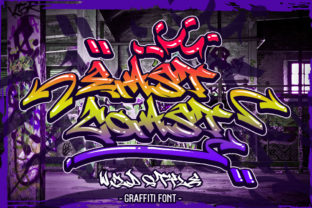
East Coast Wild Style isn’t just another graffiti font—it’s a distilled piece of New York City’s visual language: bold, layered, rhythmically complex, and unapologetically alive. Born from subway car murals and Bronx block parties in the late 1970s, its DNA includes interlocking letters, arrow-like extensions, sharp angles, and deliberate visual noise. Designers, marketers, and creators reach for it when they need authenticity—not imitation—of street culture. But here’s what many miss: East Coast Wild Style doesn’t work *despite* its complexity; it works *because* of how thoughtfully you apply it.
Assuming It’s Just “Edgy Decor” Undermines Its Power
One of the most common missteps is treating East Coast Wild Style like wallpaper—slapping it onto a logo, banner, or social post without considering context or hierarchy. A small business owner launching a craft beer brand might choose it for their can label, thinking “urban = cool.” But if the letterforms are too dense at small sizes—or if contrast between foreground text and background is low—the result isn’t boldness; it’s illegibility. Worse, it risks feeling appropriative rather than respectful.
Instead, ask: What’s the message, and who’s receiving it? East Coast Wild Style communicates energy, rebellion, and community. It lands best when paired with strong supporting visuals (gritty textures, monochrome photography, raw typography pairings) and used where attention is earned—not demanded. Try it on a large-format mural, a limited-edition poster, or as a dynamic headline over ample negative space—not in body copy, footers, or mobile navigation menus.
Overlooking Licensing—and What “Free” Really Means
Many stumble during download by grabbing the first “East Coast Wild Style free font” they find. Some versions are outdated knockoffs missing critical OpenType features. Others are illegally redistributed, carrying hidden risks: embedded malware, inconsistent kerning, or missing glyphs (like accented characters or numerals). One freelance designer learned this the hard way when her client’s bilingual event flyer rendered Spanish characters as blank boxes—after she’d already delivered final files.
Always verify the source. Reputable foundries like House Industries, Font Bureau, or independent type designers with clear licensing pages offer tested, updated versions. Check the license scope: Does it cover web use? Commercial projects? Merchandise? A $29 desktop license won’t cover embedding in an app or selling T-shirts with the font printed on them. When in doubt, read the EULA—not just the download button.
Misjudging Readability vs. Recognition
East Coast Wild Style thrives on distortion—but not all distortion serves communication. Beginners often push letter connections too far, overlapping stems or eliminating counters (the enclosed spaces inside “o,” “e,” or “a”). The result looks authentically wild… until readers pause, squint, and lose the word entirely. Recognition drops sharply when character distinction blurs. That “B” starts looking like an “8,” or “R” merges with “A.”
A better approach? Start with a trusted version that balances wildness and function. Look for fonts labeled “Wild Style + Legible” or “East Coast Wild Style Pro”—these often include alternate glyphs, lighter weights, or simplified variants designed for real-world use. Test at actual size: print a sample line at 24pt on your intended medium (e.g., vinyl wrap, screen overlay), step back three feet, and read it aloud. If you hesitate—even once—it’s too dense for that application.
Skipping Pairing Strategy (and Ending Up With Visual Chaos)
East Coast Wild Style rarely stands alone gracefully. Dropping it next to another decorative font (“Let’s add a script for the tagline!”) or a generic sans-serif (“Helvetica will ground it!”) often creates tension instead of harmony. The mismatch signals indecision—not intention.
Pair it intentionally. Strong companions include:
- Monospaced sans-serifs (like IBM Plex Mono or Input Sans) for contrast in tech or editorial contexts;
- Geometric sans-serifs with tight spacing (such as Avenir Next or Neuzeit S) to echo its structural rigor;
- Hand-drawn lettering (not fonts, but custom-drawn elements) when aiming for organic cohesion.
Forgetting the Human Layer Behind the Letters
East Coast Wild Style carries cultural weight. It emerged from Black and Latino youth asserting identity in overlooked neighborhoods. Using it without awareness flattens history into aesthetic. That doesn’t mean you shouldn’t use it—but it does mean pausing before applying it to contexts that risk trivializing that legacy: corporate diversity reports with no community input, luxury product launches disconnected from urban reality, or educational materials that omit its origins.
Respect starts with research. Watch documentaries like Style Wars, read interviews with pioneers like Phase 2 or Lady Pink, and consider commissioning work from contemporary graffiti artists for custom lettering. Even small gestures—crediting influences in project notes or linking to grassroots arts orgs—anchor your use in appreciation, not extraction.
Before You Download, Install, or Ship—Check This List
Run through these practical checkpoints before committing:
- Character set: Does it support your language(s), including punctuation and symbols you’ll actually use?
- File format: Is it OTF (preferred for OpenType features) or only TTF? Does it include stylistic alternates or ligatures you may need?
- Rendering test: Load it into your design software and preview on both Mac and Windows—some versions render poorly on one OS.
- Real-world scale: Simulate how it looks at its smallest functional size in your project (e.g., 14px on a website banner, 1.5” tall on a sticker).
- Cultural fit: Does its energy match your brand’s values—not just its visuals?
East Coast Wild Style rewards intention. It’s not about shouting louder—it’s about saying something unmistakably human, with roots, rhythm, and respect. When you honor its history, test its function, and pair it with purpose, it stops being just a font. It becomes a statement—one that resonates because it’s earned.