Norilsk Font
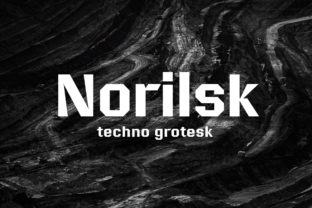
Norilsk is a geometric and clean sans serif typeface designed with modern typography principles in mind. Its structure emphasizes clarity, consistency, and visual neutrality—traits that make it well-suited for digital interfaces, branding systems, editorial layouts, and data-rich environments. Unlike highly stylized or expressive fonts, Norilsk prioritizes legibility and functional harmony across sizes and mediums.
What Makes Norilsk Distinctive
Norilsk’s design draws from classic geometric sans serifs like Futura and Avant Garde but introduces subtle refinements to improve readability and typographic flexibility. Its letterforms feature uniform stroke weights, near-perfect circular terminals on rounded characters (like O, C, and G), and carefully balanced proportions between uppercase and lowercase heights. The font includes a full range of weights—from thin to black—with matching italics, enabling robust typographic hierarchy without sacrificing cohesion.
Unlike many geometric fonts that can appear rigid or cold at small sizes, Norilsk incorporates slight optical adjustments: slightly open apertures, modestly increased x-heights in lighter weights, and nuanced spacing that supports both tight text blocks and generous line-leading arrangements. These details reflect an emphasis on real-world performance—not just theoretical elegance.
Why Designers and Developers Consider Norilsk
Professionals evaluating typefaces often prioritize how well a font supports their project’s functional and aesthetic goals. Norilsk appeals in contexts where neutrality, scalability, and cross-platform reliability matter. For example:
- Product designers selecting a system font for a SaaS dashboard may value Norilsk’s consistent rendering across Windows, macOS, and mobile browsers.
- Branding teams building a scalable identity system may appreciate its wide weight range and lack of stylistic distraction—allowing logo marks and messaging to take center stage.
- Editors managing long-form content on news or documentation sites may find Norilsk’s even texture and moderate contrast supportive of sustained reading.
Practical Benefits and Real-World Tradeoffs
The primary benefit of Norilsk lies in its predictability. It performs reliably in responsive layouts, scales cleanly from 12px captions to 64px headlines, and maintains character distinction even in low-resolution displays or compressed web font formats. Its licensing model—typically available through major font providers with web, desktop, and app usage rights—simplifies implementation for teams working across platforms.
However, these strengths come with tradeoffs. Because Norilsk avoids strong personality or historical reference, it may feel impersonal in contexts requiring warmth, tradition, or cultural resonance—such as hospitality branding, literary publishing, or artisanal product packaging. Its geometric roots also mean that very tight tracking or extreme all-caps settings can reduce legibility, particularly in longer paragraphs. Users should test Norilsk in actual interface components—not just isolated specimens—to assess how it behaves with real content density and interaction states (e.g., hover effects, form fields, or truncated text).
When Norilsk Is a Strong Fit
Norilsk excels in environments where clarity and consistency outweigh expressive flair. It is especially effective when:
- Information architecture is complex. Dashboards, analytics tools, or enterprise software benefit from Norilsk’s even rhythm and unambiguous character shapes—reducing cognitive load during data interpretation.
- Brand voice emphasizes precision or innovation. Technology companies, scientific institutions, or forward-looking civic initiatives often align well with Norilsk’s restrained confidence.
- Multilingual support is required. Norilsk includes extended Latin, Cyrillic, and Greek character sets, making it viable for international projects without needing fallback fonts or inconsistent substitutions.
- Performance constraints exist. Its relatively compact file size (especially when subsetting) supports fast loading on bandwidth-limited connections—a practical advantage for global audiences.
When Alternatives May Be More Appropriate
Norilsk is not universally optimal. Consider alternatives if your project calls for:
- Humanist warmth. Fonts like Inter, Source Sans Pro, or Open Sans offer more organic stroke modulation and greater readability in dense body text—particularly for educational or nonprofit websites targeting broad demographics.
- High-contrast expression. If visual impact or editorial distinction is central—such as in magazine covers or campaign posters—fonts like Neue Haas Grotesk, GT Walsheim, or even custom display variants may deliver stronger presence.
- Legacy system compatibility. Projects requiring support for older Android versions or legacy Windows environments may benefit from system-font fallback strategies or fonts with broader OS-level availability (e.g., Roboto or Segoe UI).
- Extensive variable font capabilities. While Norilsk offers discrete weights, designers needing continuous axis control (e.g., width, grade, or optical size) might prefer variable fonts like IBM Plex Sans or Recursive, which allow finer-tuned responsiveness.
Making an Informed Decision
Selecting a typeface is rarely about finding the “best” option—it’s about identifying the most appropriate tool for a specific context. Before committing to Norilsk, ask: What tasks must the text perform? Who will read it, and under what conditions? Does the tone of the content align with Norilsk’s neutral, structured character?
Practical evaluation steps include:
- Testing Norilsk alongside your actual content—not placeholder text—in multiple viewport sizes and color modes (light/dark).
- Comparing rendering fidelity across target devices, especially iOS Safari and Chrome on mid-tier Android devices.
- Assessing how Norilsk interacts with your existing color palette and iconography—does it create visual harmony or unintended tension?
- Reviewing licensing terms for intended use cases, including any restrictions around redistribution or embedded applications.
Finally, remember that typography works in concert with other design systems. Norilsk may be ideal for UI text but less suited for logo lockups; pairing it with a complementary display face—or using it exclusively for functional text—can preserve its strengths while addressing expressive gaps.
In summary, Norilsk serves as a dependable, modern sans serif for teams prioritizing legibility, scalability, and cross-platform coherence. It is neither experimental nor nostalgic—but consistently capable. Whether it fits your needs depends less on trend alignment and more on how closely its functional profile matches your project’s operational realities.